
The Ultimate Guide to Crafting Authentic Seafood Paella: A Taste of Spain at Home
Jump to RecipeImagine a symphony of vibrant colors, intoxicating aromas, and an exquisite medley of fresh ocean flavors, all unified by the golden embrace of saffron-infused rice. This is the magic of Seafood Paella, a dish that transcends mere sustenance to become a culinary celebration. Originating from the sun-drenched shores of Spain, it’s more than just a meal; it’s an experience, a communal centerpiece that brings people together, evoking memories of seaside holidays and lively gatherings. The allure lies not only in its stunning presentation but also in the depth of its flavors, achieved through a careful balance of ingredients and a specific, time-honored cooking technique. Our journey today isn’t just about following a recipe; it’s about understanding the soul of this iconic Spanish creation. We’ll delve into the secrets behind the perfect ‘socarrat’ – that coveted crispy rice layer at the bottom – and explore how to coax the most profound flavors from your seafood and aromatics. Whether you’re a seasoned home cook or embarking on your first paella adventure, this comprehensive guide will equip you with the knowledge, tips, and confidence to create a truly unforgettable seafood paella that will transport your taste buds straight to the heart of the Mediterranean coast.
The Story Behind
The story of paella begins not with seafood, but in the humble rice fields surrounding Valencia, Spain, around the 18th century. Originally, it was a peasant dish, cooked outdoors over an open fire by farm laborers using rice, whatever vegetables were at hand, and game like rabbit, duck, or snails. The word ‘paella’ itself refers to the wide, shallow pan in which it’s cooked, deriving from the Old French word ‘paelle’ for pan. As the dish migrated from the countryside to the coast, particularly to regions like Alicante and Catalonia, local ingredients naturally found their way into the pan. Fishermen began incorporating fresh catches like prawns, mussels, and squid, transforming the rustic ‘Paella Valenciana’ into the equally beloved ‘Paella de Mariscos’ or Seafood Paella. While the debate over ‘authentic’ paella often rages, it’s this very adaptability and regional variation that speaks to the dish’s rich cultural tapestry and enduring appeal, a testament to Spanish culinary ingenuity across centuries.
Why This Recipe Works
- Layers of Flavor: The sofrito, saffron-infused broth, and fresh seafood build an incredible depth of taste.
- Impressive Presentation: The vibrant colors and artful arrangement of seafood make it a stunning centerpiece for any gathering.
- The Elusive Socarrat: Master the technique to achieve the prized crispy, caramelized rice crust at the bottom of the pan.
- One-Pan Wonder: Everything cooks in a single paella pan, simplifying cleanup and concentrating flavors.
- Customizable: Easily adapt with your favorite seafood, vegetables, or even a blend of land and sea.
Step-by-Step Instructions
1. Prepare Your Mise en Place
Begin by chopping all your vegetables and measuring out ingredients. This step is crucial for smooth paella cooking, ensuring you can add items swiftly when needed. Have your broth hot and saffron steeped.
2. Build the Sofrito Foundation
Heat olive oil in your paella pan. Sauté the bell peppers and onions until softened, then add garlic and tomatoes. Cook down to a rich, fragrant sofrito – this forms the flavor backbone of your paella.
3. Toast the Rice and Add Liquids
Stir in the paella rice, toasting it lightly for a minute before pouring in the hot saffron-infused broth. Distribute the rice evenly, then resist the urge to stir once the liquid is added.
4. Arrange the Seafood
As the rice begins to absorb the liquid (about 10-12 minutes in), gently arrange your larger, quicker-cooking seafood like shrimp, mussels, and squid rings on top of the rice. Push some mussels slightly into the rice to steam open.
5. The Final Simmer and Rest
Continue to simmer uncovered until the liquid is mostly absorbed and the rice is tender but still has a slight bite (al dente). Listen for a crackling sound at the end – that’s the socarrat forming! Remove from heat, cover loosely with foil, and let it rest for 5-10 minutes.
Chef Tips
- Don’t Stir the Rice! Once the rice and broth are added, resist the urge to stir. Stirring releases starch, making the paella creamy like risotto instead of distinct grains, and prevents the coveted ‘socarrat’ from forming.
- Hot Broth is Key: Always add hot broth to your paella. Adding cold broth will drop the temperature of the pan, disrupting the cooking process and potentially leading to unevenly cooked rice.
- Embrace the Socarrat: That slightly crispy, caramelized layer of rice at the bottom of the pan is the holy grail of paella. Achieve it by cooking undisturbed at the end until you hear a gentle crackle, then remove from heat.
- Quality Saffron Makes a Difference: Saffron is not just for color; it’s for flavor. Invest in good quality saffron threads and steep them in warm broth before adding for maximum aroma and taste.
- Layer Your Seafood: Add larger, slower-cooking seafood (like larger fish pieces) earlier, and quicker-cooking items like shrimp and mussels towards the end of the cooking process to prevent overcooking.
Frequently Asked Questions
What kind of rice is best for paella?
Short-grain varieties like Bomba or Calasparra rice are ideal. They absorb a lot of liquid and flavor without becoming mushy, and they are excellent for developing the ‘socarrat’.
Can I make paella in a regular pan?
While a traditional paella pan (paellera) is wide and shallow, promoting even cooking and good socarrat, you can use a large, wide, shallow skillet or braiser if you don’t have one. Just ensure it has a large surface area for the rice to cook evenly.
How do I know when my paella is done?
The paella is done when the liquid has been absorbed, the rice is tender with a slight bite (al dente), and the socarrat has formed at the bottom. You’ll typically hear a gentle crackling sound at the very end. The seafood should be cooked through and mussels open.
Can I prepare paella ahead of time?
Paella is best enjoyed fresh, directly from the pan. Reheating often compromises the texture of the rice and can make the seafood tough. If you must, leftovers can be gently reheated in a pan with a splash of broth, but the socarrat will likely be lost.
The Ultimate Guide to Crafting Authentic Seafood Paella: A Taste of Spain at Home
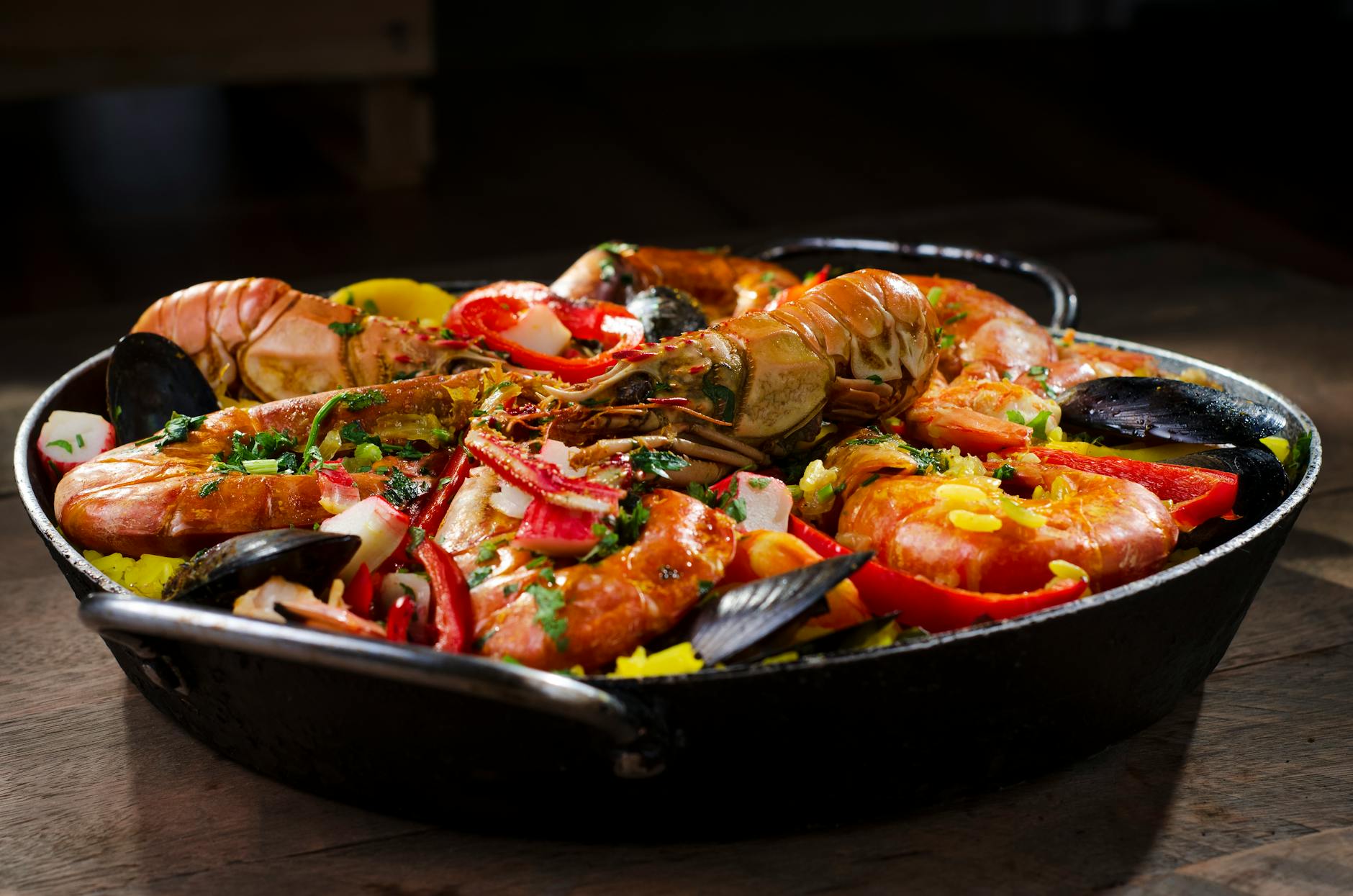
Ingredients
- 1/4 cup olive oil
- 1 large yellow onion, finely diced
- 1 red bell pepper, finely diced
- 4 cloves garlic, minced
- 1 (14.5 oz) can crushed tomatoes
- 1 1/2 cups paella rice (Bomba or Calasparra)
- 4 cups hot seafood or chicken broth, infused with a generous pinch of saffron threads
- 1 lb large shrimp, peeled and deveined
- 1 lb mussels, scrubbed and de-bearded
- 1/2 lb calamari rings
- 1/2 cup frozen peas
- 1/4 cup fresh parsley, chopped, for garnish
- Lemon wedges, for serving